Shelter Dogs Teaching Lessons To Live By

For the past 14 months I have been volunteering at Foothills Animal Shelter (FAS) in Golden, CO. It is a good facility for animals of all kinds with wonderful people working and volunteering there. Since I have been spending hundreds of hours as a volunteer, I have learned a great deal from the fantastic Vets and Vet Techs there, but the greatest inspiration has come from the Shelter Dogs. These pups of all ages and stages have come into FAS as strays, surrenders, found dogs or having been injured or abused but even though they are not where the dogs would want to be (FAS treats them very well). Their response to their situation is what makes these dogs teachers of life lessons we could all benefit from and these lessons follow.1)Be Ready For A Great Day- Each Day as you walk in to see the dogs they are telling you and their body language is saying “Hey! Hey! Let’s have a great day”. The pups are ready to make the most of the day that is ahead, they are not worried about what happened yesterday or what’s going to happen tomorrow only let’s have the best today that we can. Imagine how much better our days would be if we started each day in the same positive way.

2)Be 100% Into Whatever You’re Doing- when these pups go for a walk they are totally into their walk! If they are eating or barking or playing with dogs or people, that is what they focus on to enjoy it to the fullest. How much better would our lives be if when we were doing activities we could focus on getting the most out of This activity.

3)Be Ready To Make New Friends- These dogs in these new and different environments are ready to open up their hearts to meet and greet new dogs and people. They are ready to enjoy the opportunity to have friends in their lives. We could all make our lives better if we were just ready, like these pups, to take new friends into our journey.

4)Bounce Back From Bad Stuff- These pooches are amazing at coming back from challenges, whether it is being abandoned, abused or being injured by a car or train. They don’t let the bad stuff that’s happened or the pain they’ve felt keep them from finding love and happiness even while they are still recovering. These pups move forward and find ways to Bounce Back. If we could all come back from our own bad stuff like the dogs do we could all enjoy more of our lives and get back to living and loving more.

5)Find Joy- The dogs at the Foothills Animal Shelter wag their tails, have a twinkle in their eyes and jump for joy in finding the simplest pleasures in their day. This is a great lesson from the pups because they look for joy all the time. I hope all of us over the holiday and into the new year look to Find Joy in the simple wonders that are all around us. If you’re struggling to see what Joy looks like, visit FAS!

My hope is the dogs can help you with some life lessons as I know they will continue to inspire me.

Photos are 1) Buster 2) Frank and Frank 3) Pebbles
A Season to Be Thankful For

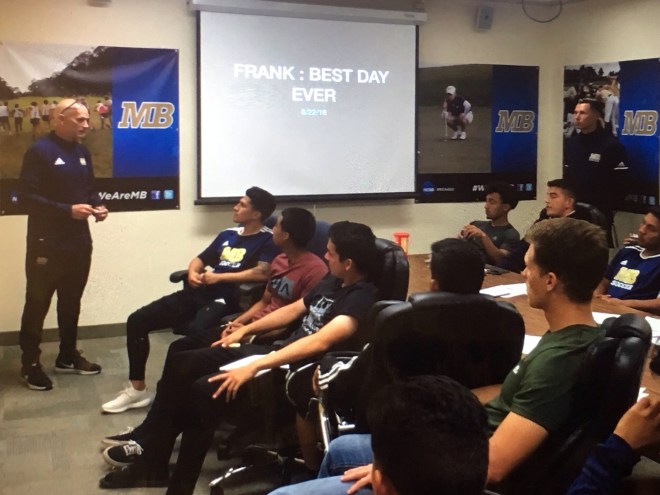
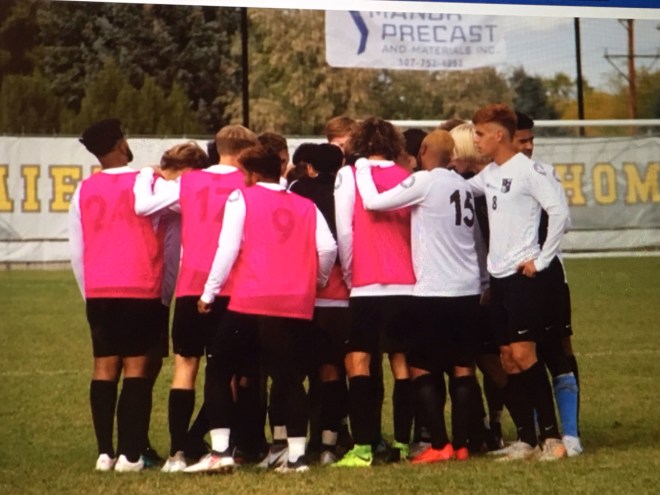
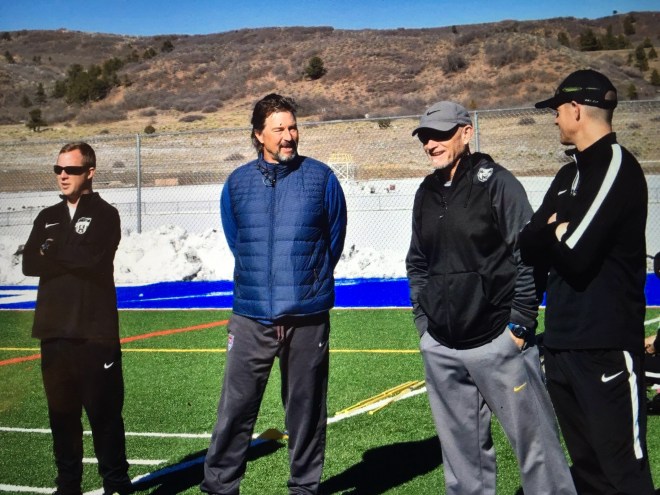
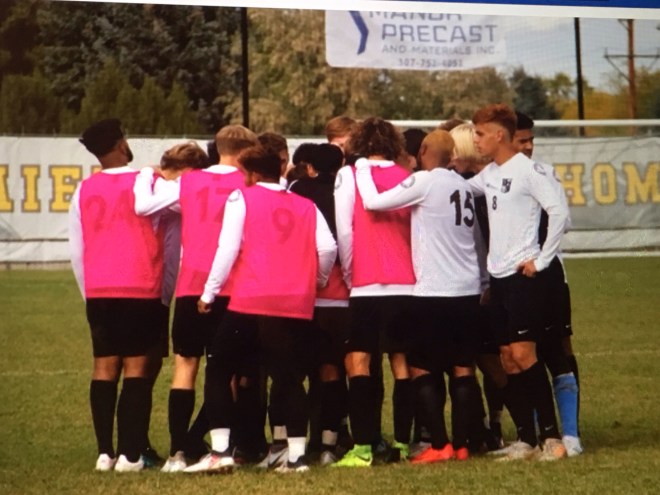
Best Day Ever Consulting had 3 teams that were part of the BDE premier program. These Programs were; Sheridan College, California State University @Monterey Bay and University of Central Arkansas. It is a varied group of schools from very different locations and diverse higher education institutions but the areas that the soccer programs have in common were Coaches and players that wanted to take steps toward becoming a more successful program.

The Coaches of these programs Tim Starr at Sheridan, Shane Carew at CSUMB and Ross Duncan at UCA were willing to partner with BDE. These thinking partners were able to take their programs forward to being better than they had been in previous seasons and in some cases Ever. These coaches were willing to go outside the box and do something athletic coaches do not do but successful leaders in other fields often do. They were willing to bring in a consultant to work alongside of them to provide ideas, discussion and a thinking partner. You have to be pretty confident to bring an outsider into Your Program. The Assistants I got to work with from each of these programs were all wonderful to work with and were great at sharing ideas and helped me to improve as a consultant and coach.

The student-athletes of each of these programs were a joy to work with. In each program together we faced different challenges and therefore varied solutions. Each time the coaching staff and BDE asked for the soccer athletes to step up to a new challenge they answered the challenge. The steps that the athletes took this season will continue to effect change for the future as many of the improvements involved the culture and targets of the programs moving forward.

The Administrators at these schools were willing to allow their coaches to bring in another set of eyes to help the coaches and athletes in their programs, also very forward thinking.

So I am thankful for the opportunity that BDE had in working with these Coaches and Athletes. The work was engaging and made me improve as a consultant, coach and person while helping these programs to some Best Days and even some Best Seasons.

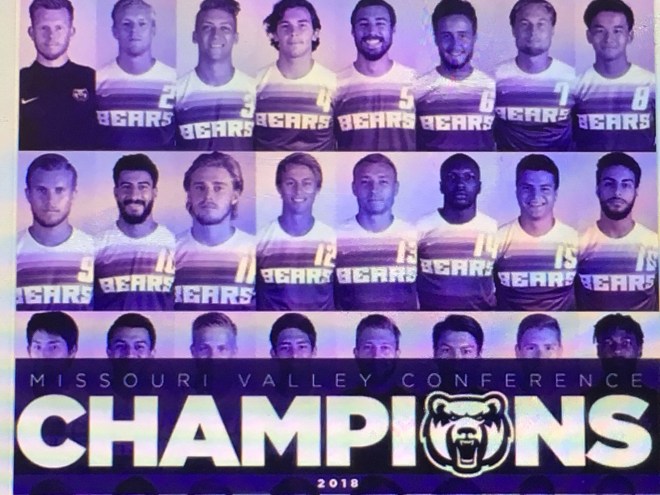
The results on the field, at training and in the locker room were incredible and even better than others may have thought possible. But the greatest bonus was the friendships and relationships gained with these coaches and athletes. Thanks to the Generals, Otters and Purple Bears for some Best Days!Thankful for all the players and coaches whom I have gotten to work with to get me where I am today! Thank You!
Making Your Program Better!

If you are a leader of a fall athletic program and your season is over now, you are probably looking for a way to improve your program. This idea works- A I R. I used this myself and also with the programs that I consulted with this season. Each of the programs had Best Day Ever level seasons. Right Now is the perfect time to begin using it!

A- Acknowledge –sit down with everyone involved in your program, from a staff point of view, that you can get together. Let them know a day or 2 ahead that you are going to do this exercise and that the meeting is going to take place in an open area that is not anyone’s in particulars office. Moderator (obviously BDE consultants are best for this but if not available do your best)asks what did we (team)do well? What were positives of this season? So many times coaches can rattle off 15 areas that were weak or not positives. That is why it is best to start with the good stuff. Many times this part helps you realize there is more right than you thought and allows everyone to speak up about good stuff. One idea often leads to another and everyone feels like they are contributing. For a change, even with it not being the best season, it is important to Acknowledge the good stuff even before moving on to the areas needing improvement. What do we need to do better? This is very important to get all of these put forward to the group, as one of the advantages of having a less than successful season is that these are the times when people are most likely to change and are open to a new and different path. “Doing the same thing over and over and expecting different results is the definition of Insanity”. The Acknowledgment part of this requires honesty, open communication and frankness (not just the BDE guy). This portion of AIR must explore every part of the program that has gotten you to this stage this season.

These steps can be done in one meeting which is probably good when using AIR for a match, game or training but for a season or program review it is best to separate the sessions so there is some time for reflection between each part of AIR.

I or E- Interrupt or Encourage- After you have Acknowledged the good and bad, you must figure out how to Interrupt areas that need changing and Encourage those areas that are important to keep as part of the program. The group has to think of all the ways to change and remove the habits and culture that is considered counter productive to the program’s success. Part of this examination to interrupt or encourage is to find the root or basis to the good and bad the group has acknowledged. How can you change the areas that need changing? How do you promote those positives you want to continue to be in the program?

R-Reframe- Together the staff now has to come up with a plan going forward to implement the how to Interrupt and Encourage. This is where you figure out the changes you are going to make in your staff, your players, your culture and everything you do with your program. Full ownership with no excuses to move the program in a positive direction. At BDE we have helped programs to do this, it can be done.

Make your program better! GET SOME AIR! Still be playing this time next year!

AIR – A Means to Find a Path to Success

Having been involved in pre seasons as a coach for forty years, this year I got to be involved with 3 different programs. At each program I got to partner with good coaches striving to be better and willing players wanting to help their team reach its ceiling. Now we have reached that time of year where adjustments are needed in order to achieve the highest possible level of success.

So I am borrowing an idea from Glen Fisher at Peripheral Vision in which he uses the term AIR to help athletes recover from mistakes or stress or challenges. AIR meaning A to acknowledge, I to interrupt and R to reframe to lead an individual to better performance. For more info on this go to http://www.peripheralvision.net .

At BDE we are suggesting using this idea for your team as we head into the last half or third of the season as you should have a good idea of your current performance level and where you want the team to be. So do this for your team and it will help you to see the path to success for the rest of the season. If nothing else, it will help you to see how to be better to finish this season.

A – acknowledge the status of the level of the team right now. Answer these questions; What is working well? What is not working? What are the team’s strengths? Weaknesses? This is the evaluation of what has occurred with the team up until this point of the season. This is difficult to be on target with because it requires a keen eye to be honest about where the team is regardless of results but this is essential to becoming better.

I- interrupt those areas that need to be improved. So after the evaluation the need is to look at those areas to change the status quo. Moving along on the same path and expecting change that has not yet occurred, is accepting failure as an option that is ok for your program. So the question to be answered here is; what to change?

R- reframe as to how the team is going to change. How the team with the changes is going to move on to be a better team and make this a better program. The reframe changes the team for the better by making those changes deemed necessary by the evaluation and choices about what to change to improve those areas that can make the team better for what is left of this season. These changes can make the team and program better for the future seasons as well. The changes the reframe asks for will cause players and coaches to continue to better their performances.

Thanks to Fish for the idea and give it a try with your team. I know I will and hope we can with the Purple Bears, Otters and Generals.

Otters Float
Purple Bears Home
Generals have some bigger fish to fry!

Three Lessons to Carry Forward From the World Cup 2018 Semis and Quarters Into Your Coming Season

It is always refreshing to be able to watch top teams in top competitions and figuring out how their tactics and physical actions could apply to your squad. From this World Cup these lessons could be beneficial to most squads in pursuit of better results.

Lesson 1) Set Plays! We have seen from this World Cup just how important these plays can be. It is not just important to practice these but for everyone on the team and in the program to be totally on board and bought in to the difference that free kicks, corner kicks, penalty kicks and throw-ins can make. Tesho came out on twitter asking if teams should have a Set Plays coach because of all the impact these plays have had in this WC. Nice to get more coaches working but the most important aspect is that the manager or head coach puts his belief in training for Set Pieces and that this belief is held by the entire team. The coaches need to plan for all the possible situations and be willing to be creative about setting up opportunities for key targets and key servers. A good use of training time is reps with the server and receiver so when the whole team is together they are already adept at making the proper service and the target or targets are also ready. A PK is also a Set Play that should be trained for just like other free kicks.

2) Making your team into a Real Team! This was obvious from the tournament and particularly the knockout matches that those teams that had a belief in each other and were willing to all do the so called dirty work were more likely to move on. These teams also have seemed to enjoy being together at the tournament. Finding ways to build your team, to bring them together, and make sure you are all enjoying The opportunity is more important than ever. This should be easier to do with a club or college team than it is with a national team. But you must do this intentionally and you must have a plan and the whole program top to bottom Working to make Your Team!

3) Being able to adapt to situations! Having a plan for each situation. Being able to attack, putting the ball into dangerous situations and getting DZT (Danger Zone touches). Providing good service while attacking in more than one way. Being able to defend in more than 1 way and being able to attack out of each way. If a team sits in, you are ready. If they press you have trained for it. This business of a team not playing the way they should have, means you were not prepared as coaches and players and that is who is to blame. Train to be ready for your side to be at their best.

This World Cup has taught us to train for our Best Day Ever Today and make Everyday the Best it can be!

Round OF 16 Ideas to Make Your Team Better By Scoring More Goals

Scoring goals has resurfaced as an important part of winning soccer matches in this World Cup and this has made these matches so much more exciting to watch.

The goals have been scored by achieving the following;

1) Getting touches in the Danger Zone (Top Gun term).  The Danger Zone is an area the width of the penalty area that extends 22-25 yards out from the goal.  The late Dick Bate had some great ideas about dividing the field into zones.  All I am saying, is teams that try to purposefully get touches in the Danger Zone are scoring goals.  Those teams getting multiple consecutive touches as a team or by individuals are creating looks at goal and are causing defenses to make plays or make mistakes.  Teams with lots of possession but few touches especially consecutive touches inside the Danger Zone are the Big Teams that went home early.  Programs can plan for creating situations where they work to get more touches and therefore chances by the way they train to get into the Danger Zone.

2)Set Plays are being scored in record numbers as there are teams that have worked on these a great deal in training.  Those teams that have spent the time have reaped the benefits.  Again those teams very good in possession get more free kicks usually but a number of the Big Teams that are out did not put in the necessary time on their free kicks and therefore they lacked in both execution and creativity.  PKs are not a lottery and therefore neither is a PK shootout.  Having success on Set Plays is an action that requires physical, mental, and emotional training.

3) Attacking quickly either on a counter attack or by pressing the opponent to make a costly error in their defensive half.  The key to either of these methods is that you are attacking in situations when you don’t have to beat very many opposing players.  When playing a team that makes a lot of passes in order to maintain possession these teams will push many players forward and in so doing when they make a mistake ,if countered quickly ,can be caught in numbers down or even numbers situations. (In this WC the team with the higher possession numbers has lost more matches than they have won) The means of getting into a good numbers situation is to win the ball before there is even an opportunity to build.

4) Teams that are shooting when they have opportunities are scoring goals!

The managers and coaches that create these situations in training are going to make their teams better and those teams that can do all of these have a chance to be the best.  Teams can not rely only on a Plan A!  You must have a Plan A, a Plan B and a Plan C and train to do all of them as needed even in the same match.

Knowing this, is what helps BDE help you in training, in matches and for years to come in building a program.

saint basil s cathedral
Photo by Julius Silver on Pexels.com


saint basil s cathedral

5 Lessons From World Cup 2018 So Far

For Coaches, Managers, GMs and Players here are five ideas or lessons that could help your team going forward into your next match or season!

stadium flag holding cheering
Photo by Caio Resende on Pexels.com

1) Every team that has been successful has a way of playing that is their own!  Favored squad or not they have a way of playing that suits their team.  This is not to say they only have one way of playing ,quite the contrary ,these teams have an A plan, a B plan and sometimes a C.  So these teams can adapt within their own style.

2) Successful teams at the 2018 World Cup are good at set pieces!  They work on attacking and defending set pieces!  So far I have it at 38. This even means working on PKs. Teams  that have missed these have paid the price.  Creative and well worked offensively and tough and focused defensively!

3) Teams playing up to or beyond their potential have taken the field ready to compete! Whether they were favored or not they were ready with a plan to play as hard as they can from the opening whistle! The teams coming out on top also play all the way to the final whistle!  Competing from beginning to end is what the teams reaching their ceiling are able to do thus far in this tournament.

4) Possession stats have meant almost nothing! Two good examples of this are Russia vs KSA and Mexico vs Germany with both the winning teams having much less possession.  The teams doing well have been putting the ball into dangerous situations whether it be into the box or on the counterattack.

5) Those teams having a real team spirit have been able to get the most out of their squads!  When every member of the team is bought in from superstar to journeyman, those teams have been their best and the most successful.  Every teammate is willing to defend and work for the team.

At BDE we will be watching for more ideas and lessons along the way to help us become better at The Beautiful Game!

College Soccer Could Be A US Advantage! or Stop Copying and Start Enjoying What Makes US Soccer Unique

The World Cup is starting this week and the US Soccer fans, coaches and administrators are still reeling from not qualifying.  And by reeling I mean blaming different individuals, organizations and leagues, one of which that somehow got its fair share of blame was College Soccer.  College Soccer could be made better for the players and coaches for sure but it is my contention that many other of the best football countries in the world wish they had College Soccer.  It is unique to the US and we should and can, take those facets that make us different to make us stronger.  It seems we are always taking the latest football fad (the hot country or system) and trying to adapt to that, be it Spanish, Belgian, Dutch, German, African, Brazilian, French, English, Mexican or others.  We are not any of these, (because in a way we are all of these)we can learn lessons from them but we can not copy any one solely as what we should be doing.  The US way can include ideas from all of them just as our country is made up of all of them but we have to have a US way and that way includes college soccer.  We need to learn from others but copy no one!

Some reasons why college soccer is so important;

1) 18 and 19 year olds get a chance to play in meaningful matches that mean something to their teams and their teammates.  As many as 25 matches a year playing 70- 90 minutes a match.  That does not happen in the pro game here except for a handful of players (these players can move on without college soccer but they are not in the majority).   Add to these a good PDL type league and that is 35 matches with major minutes for these top players, much better than what they’re getting now if they turn pro out of high school.

2) Gives players a chance to grow as people from leaders that care that they do grow and are able to help them learn to take care of themselves.  ( If MLS would employ a department with each club to help these young players that might help them make this transition to adulthood and therefore a better career) This is already an important part of the college education so is not an extra cost item and is a goal universities and programs work to accomplish.

3) The facilities are incredible!  There are fabulous fields, great conditioning and regeneration facilities with staff trained to work with young student-athletes.  Again these are already there for the young athletes to use to help them develop physically.

4) The top US coaches have been college coaches or college players ( Arena, Bradley, Vermes, Gunn, Kreis, Berhalter, Cirovski,Ramos, and Marsch to name a few).  The top coaches learned to develop their players during the spring season and motivate their players to improve away from practice time on their own.  For MLS owners the college coach understands a salary cap.  He, also better than any others, understands the American player and how to help them reach their performance ceiling.  If we are looking at the US current top player, we need college coaches to have more children and raise them around the sport?

5) The college programs teach players; What to eat, How to sleep,Proper regeneration and recovery,  How to focus, How to be a good teammate, and many other tools to become a better athlete and person.

Above are a few ways College Soccer is ready to or already making a difference but let’s also throw out some ideas in making it better;

Lengthen the season as far as weeks to play the matches although most schools do not play matches on back to back days as they do in the DA.  The addition of even 3 or 4 weeks helps spread the matches for better player performance and welfare.

Reduce the number of substitutions starting with at minimum no re entry in a half and only 3-5 subs per half on 2 stoppages to make these subs.  (Would actually like to see MLS add a sub being a summer league or even more toward young players being used think about getting an extra sub if he is 22 or under?)

After a winter break teams can train with the ball, as a team 10 hours a week.  Would help with both development and also allow for recovery with 2 days off a week.

Not in favor of changing the clock as actually the US College Soccer has that right as there is an accurate real number. Soccer is the hardest sport to officiate so the referee should not have to keep time also.

College Soccer is unique to the US so let’s use it and build on it to help make the sport here better.  Everyone is usually complaining about the pay to play, college soccer is an area where the players are not having to pay to play and will help their development. (Woitalla wrote a good article about making use of High School soccer to advance the sport, the same could be said for collegiate soccer).  College Soccer can be an advantage we have, so let’s recognize that and make use of helping college soccer better the sport and the development of young players.

Let’s Get Going!